
Comcast 2026: AI & the Future of Financial Wellbeing Services
Listen to the
AI KEYNOTE SONG
The easiest way to review my keynote in 5 minutes! Share the key points of the AI Keynote with this song. It’s the full keynote, synced along with my slides!
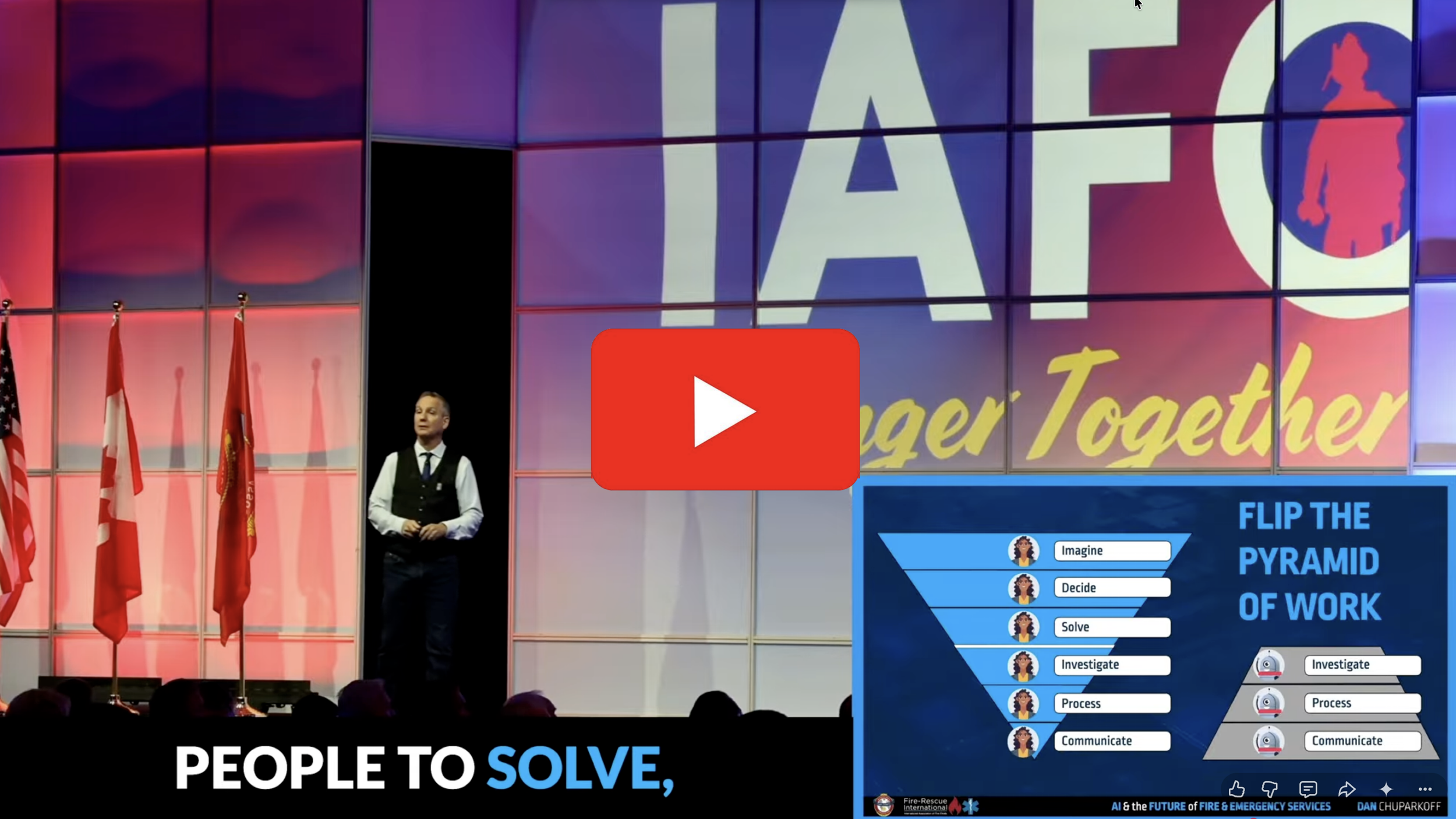
A day in the life in YOUR AI FUTURE

PDF SUMMARY of key slides
This “Slide Cheatsheet” was customized for your specific talk. It’s designed to help audience-members like you, by wrapping my AI & the Future of Everything keynote into an easy-to-skim, easy-to-share, or easy-to-print resource for future reference.
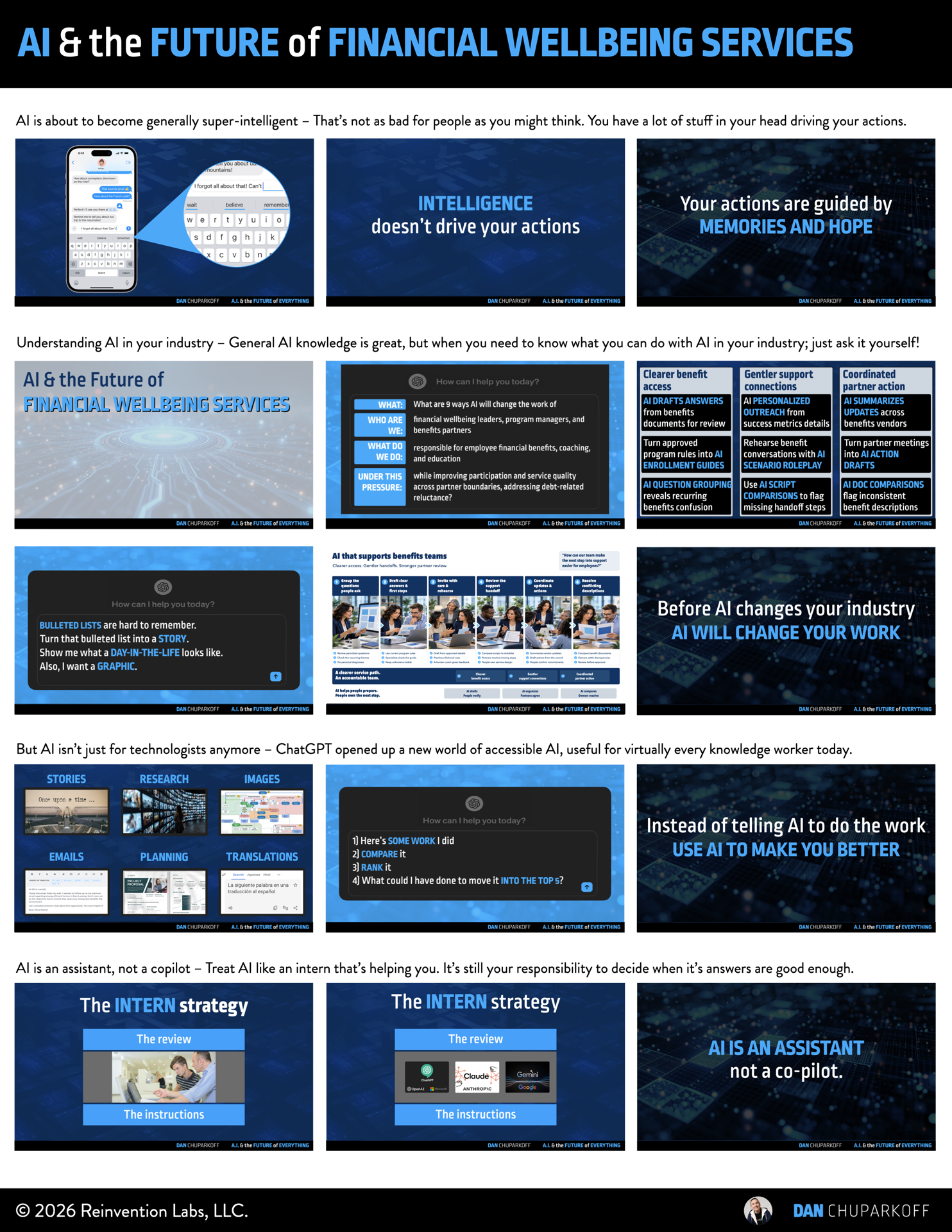
Download the 3 page
high-resolution PDF here:
Hope you find it helpful!
AI NOTES from Dan’s AI Keynote
*These notes were created using ChatGPT 5.6 pro.
Transcription errors or mistakes have not been fixed
in order to demonstrate the current state of AI notes.
Summary
Dan's first encounter with AutoCAD changed how he understood work: copy and paste made repetitive drawing dramatically faster while architects still directed the design. He used that story to frame AI as assistance that changes how people work. As tools take on more of the manual effort, people continue watching, correcting, and directing the results.
That partnership requires judgment. The sentence-completion exercise, the glue-in-pizza example, and familiar autocomplete suggestions showed why a plausible answer still needs human review. People bring context, memories, and hopes to their decisions. The intern model makes the working relationship concrete: give instructions, review the work, refine the instructions, and learn where the assistant's capabilities end. AI can also help people improve by comparing their work with previous attempts and suggesting what to do better next time.
For financial wellbeing leaders, program managers, and benefits partners, the keynote explored clearer benefit access, gentler support connections, and coordinated partner action. These are starting points for a conversation that the professionals in the room must direct. The larger goal is to make the lower layers of work more efficient and use the recovered capacity to solve, decide, and imagine.
Action Items
[ ] Ask the question for your own role. Tell AI who you are, what you are responsible for, and what makes that work difficult. Ask for nine ways AI could change the work, then request alternatives and use your expertise to identify an opportunity worth exploring.
[ ] Map where your time goes. List the work you do and group it into communication, process work, investigation, problem solving, decision-making, and imagining. Choose one recurring task in the first three layers where assistance could create room for the last three.
[ ] Try the intern loop. Give AI instructions for that task, review its output, and explain what needs to change. Repeat as useful, recognize its capability limits, and keep responsibility for the final result.
[ ] Use AI to improve work you have already done. Compare a piece of your work with previous examples of the same kind. Ask what distinguishes the strongest attempts and what you could improve on the next one.
[ ] Make meeting knowledge easier to reuse. Where AI note-taking is permitted, use it to produce searchable, shareable notes and review them for accuracy. Use some of the time saved to address a problem, consider a decision more carefully, or develop a new idea.
Key Ideas
Assistance changes the work
AutoCAD's copy-and-paste capability removed repetitive effort while architects continued to guide the work. AI creates a similar opportunity: faster assistance increases the importance of oversight, correction, and direction.
Plausible answers need review
The “once upon a time” exercise illustrated how a likely next word can emerge from several possible choices. The pizza example showed how flawed source material can produce an unhelpful recommendation. Ask about alternatives and uncertainty, then judge whether the output is suitable for the task.
Your context matters
Autocomplete is useful because you can accept a suggestion, change it, or keep typing. Apply that same judgment to other AI output. Your experience, relationships, priorities, memories, and hopes shape what a good answer means in your situation.
AI is your intern
Give the assistant a task, let it attempt the work, and review what comes back. Better instructions can improve the result, but some tasks exceed the assistant's capabilities. You remain responsible for deciding what is good enough to use.
Feedback can become a working habit
Dan described using AI to compare his posts, conversations, and keynotes with earlier attempts. The useful next step is to understand the differences and apply the feedback. This makes improvement part of repeated work.
Make the bottom faster so the top can happen
The hierarchy of work has six layers: communicate, process, investigate, solve, decide, and imagine. The first three can consume the week. Assistance there creates capacity for harder problems, better decisions, and ideas for a better future. The song reinforced this purpose for the time people recover.
Opportunities for RV dealership teams
The keynote grouped the opportunities into three areas. Use them to explore what would improve your own services and partner relationships.
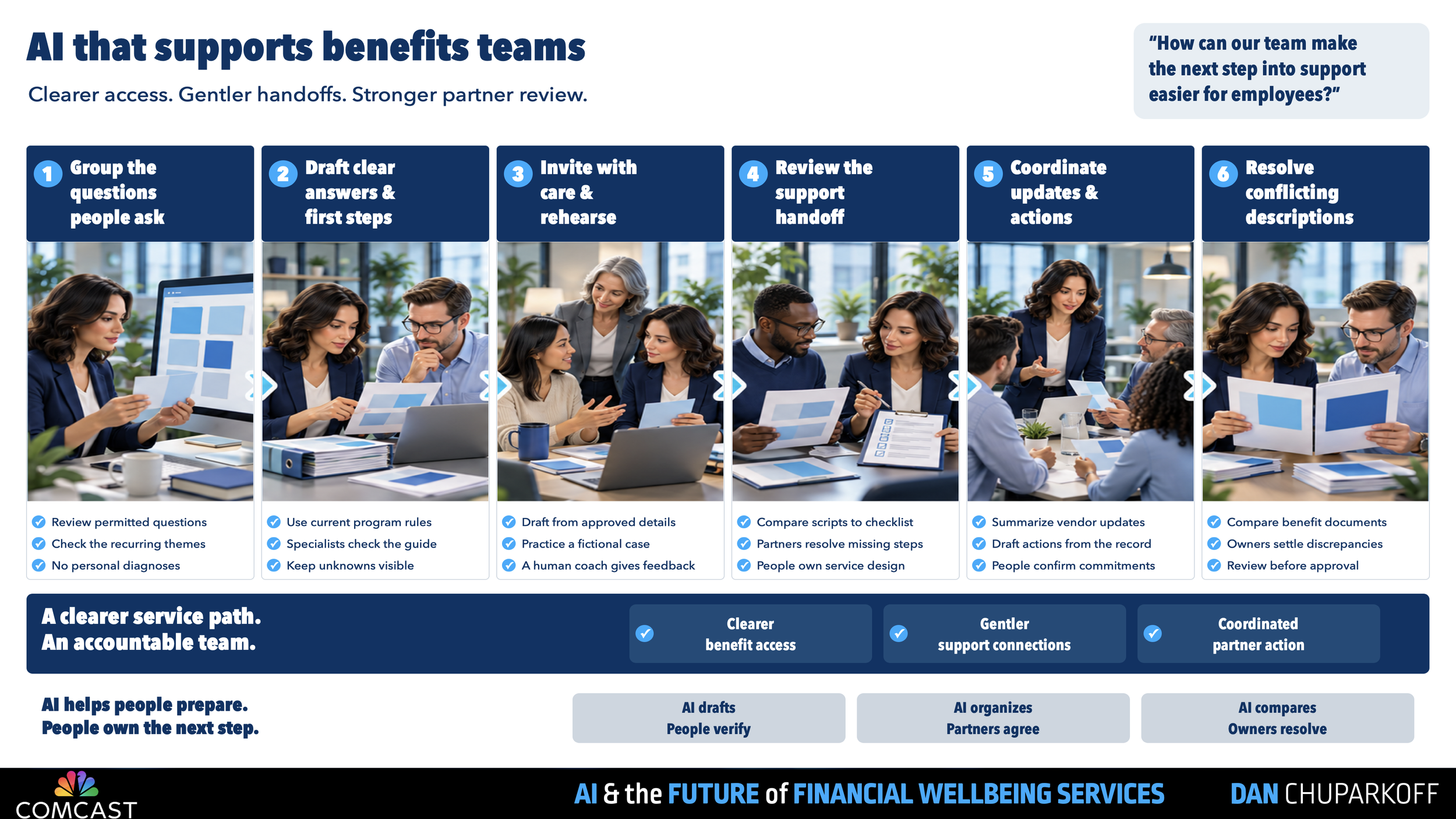
Clearer benefit access
Use AI to help draft clearer answers and enrollment guides. Group recurring questions so the team can see where people need better explanations and more useful first steps.
Gentler support connections
Develop content for groups of people who share circumstances and concerns. Rehearse difficult conversations with AI before having them with people. Dan distinguished this group-based tailoring from creating content for specific individuals.
Coordinated partner action
Explore how AI can help different teams and partner organizations keep their information and work in sync. The value comes from helping the people involved coordinate the service they provide.
The invitation was to have your own conversation with AI and assess the ideas as experts. Ask for more options, explore the information and steps an idea would require, and turn a list into a day-in-the-life picture that makes the possible changes easier to understand.
Talk Flow
1. SeeTechnology assistance changes how work gets done
The AI-generated opening & changing tools
The opening demonstrated AI-generated media and introduced the broader question of how assistance changes everyday work.
The AutoCAD copy-and-paste story
Repetitive parking-lot drawing became dramatically faster when the tool handled the repeated action.
The architect still supplied the purpose and directed the work.
Assistance, oversight & the next copy-and-paste moment
New tools shift effort toward watching, correcting, and directing results.
Explore what AI can usefully help with in ordinary work.
2. Keep human judgment in the loop
Sentence prediction & uncertainty
A common answer can sound confident while other choices remain possible.
Consider alternatives and the level of certainty the task requires.
The glue-in-pizza example
Source material can mix expertise with jokes, fiction, and mistakes; recommendations still need review.
Autocomplete as familiar assistance
Accept useful suggestions and correct or ignore those that miss your meaning.
Memories & hope
Experience and the future you want to create help determine which choices make sense.
The AI intern
Use a cycle of instructions, work, review, and refinement while retaining responsibility for the outcome.
3. Explore AI in financial wellbeing services
The role, responsibility & difficulty question
Give AI enough context about your work to begin a useful conversation about possible changes.
Benefit access, support connections & partner coordination
Explore clearer information, conversation practice, and better coordination around the services you provide.
Expert evaluation & the day-in-the-life picture
Challenge the suggestions, ask for alternatives, and decide which possibilities fit.
Turn the possibilities into a picture of how the work could change.
4. Improve performance & recover capacity
AI as a performance coach
Compare recurring work with earlier attempts and use the differences to improve the next attempt.
The hierarchy of work
Communication, process work, and investigation can fill the week, leaving too little time for the other three layers.
Solve, decide & imagine
Direct recovered capacity toward difficult problems, considered decisions, and ideas for a better future.
Treat AI's output as recommendations that people must evaluate.
5. Share knowledge & use the time you recover
Searchable meeting knowledge
Shared notes help people find and reuse information beyond the original conversation.
Turning notes into a song
The song snippet demonstrated another way to remember and share the solve, decide, and imagine message.
Collaboration across languages
The translation demonstration and team example showed how language assistance can help people collaborate.
Managing a world of more
Expectations and information keep growing while the hours in the week remain limited.
Make the lower layers more efficient and use that capacity to shape better financial wellbeing services.