
Karbon Next 2026: AI & the Future of Accounting Practice Management
Listen to the
AI KEYNOTE SONG
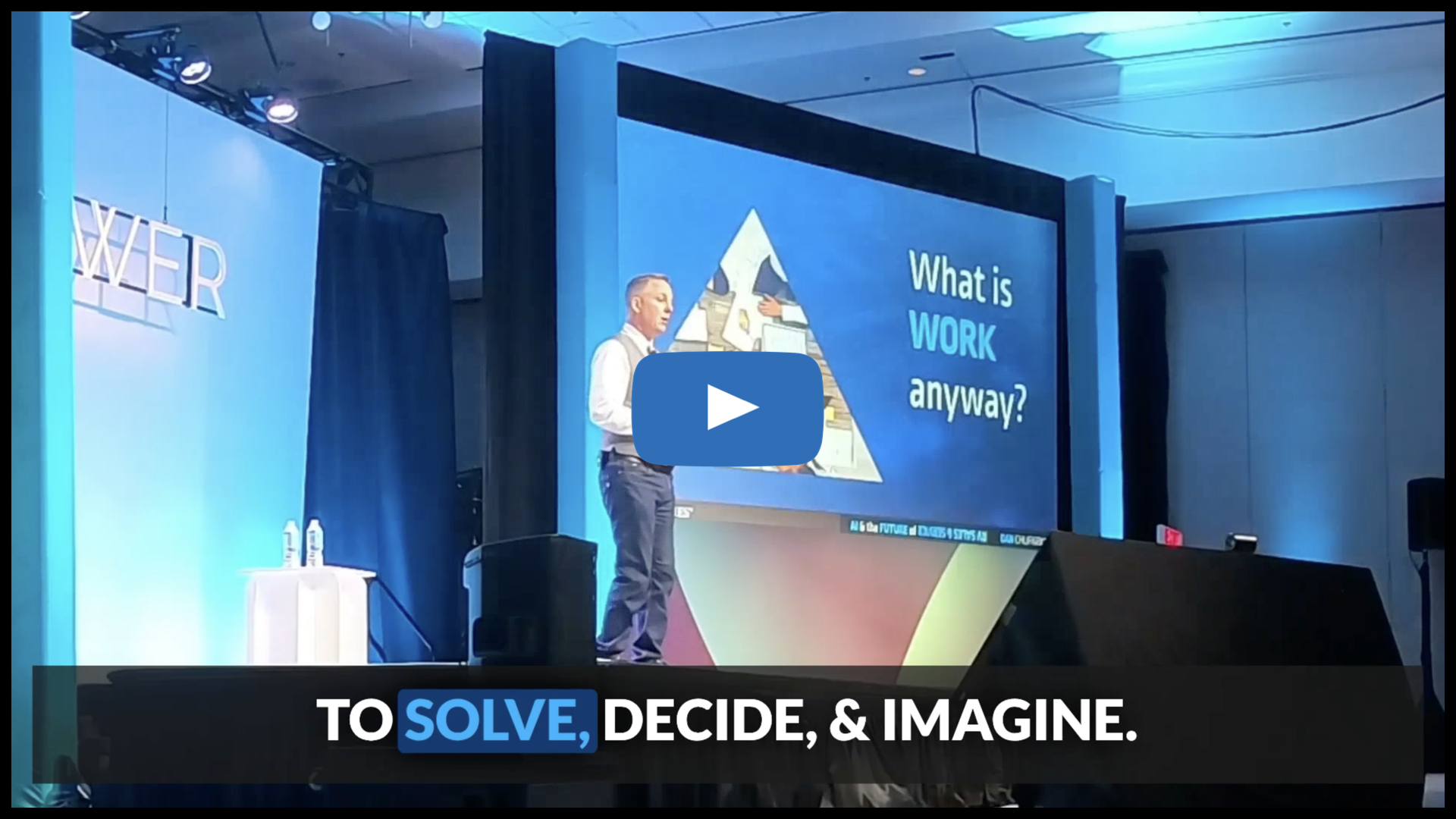
The easiest way to review or share the key points of my AI Keynote is with this song: the full keynote, matched with slides, in 4m32s!

PDF SUMMARY of key slides
This “Slide Cheatsheet” was customized for your specific talk. It’s designed to help audience-members like you, by wrapping my AI & the Future of Everything keynote into an easy-to-skim, easy-to-share, or easy-to-print resource for future reference.
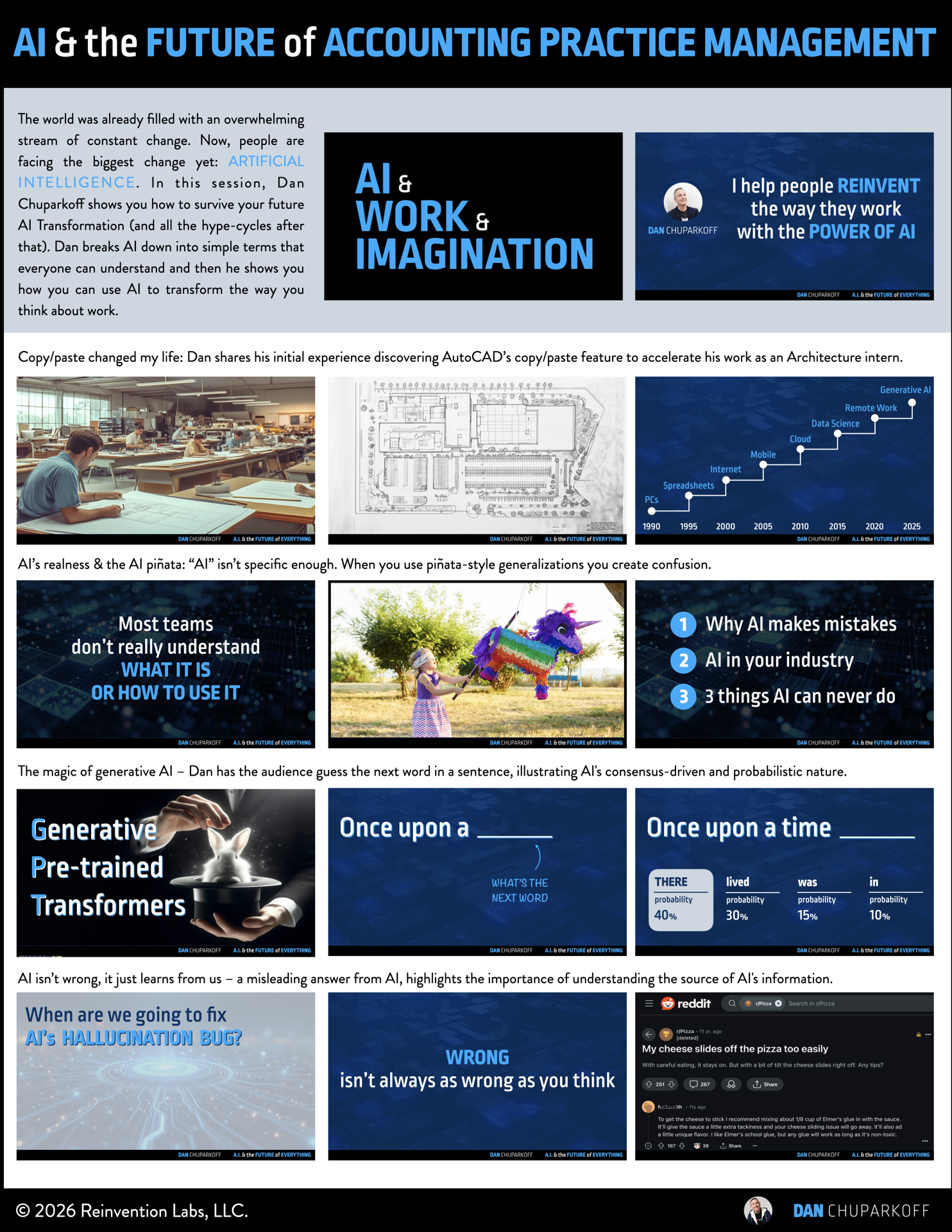
Download the 3 page
high-resolution PDF here:
Hope you find it helpful!
Check out the
ACCOUNTING PRACTICE
FIELD GUIDE
In my keynote, we didn’t have time to go into all the detail on the AI transformations. But here, you can see all of the amazing detail.
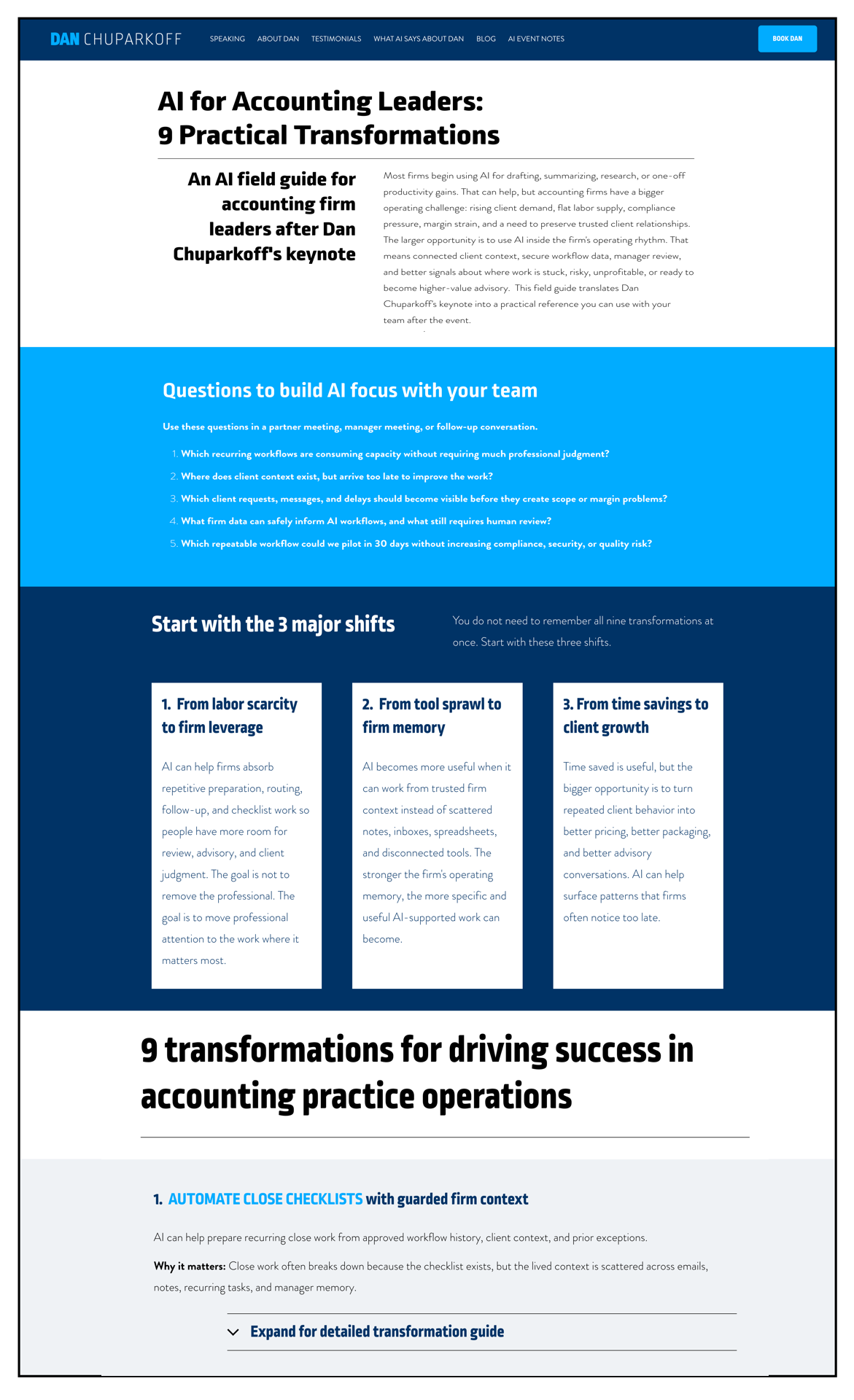
AI NOTES from Dan’s AI Keynote
*These notes were created using GPT 5.5 pro.
Transcription errors or mistakes have not been fixed
in order to demonstrate the current state of AI notes.
One-Sentence Takeaway
AI should help accounting firm leaders move faster through communication, process, and investigation while people keep responsibility for judgment, client trust, and the higher-value work of solving, deciding, and imagining.
Summary
Dan opened with an AI-generated video to show how quickly synthetic content quality is improving. The point was not that AI is magic. The point was that AI-assisted work is starting to look better, faster, and more useful than work created without it.
He then used the AutoCAD parking-lot story to frame AI as the next copy-and-paste moment. AutoCAD did not replace architects; it made precise, repetitive drafting dramatically faster. Dan used that story to separate AI as an assistant from AI as an automator and to show why leaders need to know what to hand to AI and what to keep human.
The middle of the keynote explained why AI can be useful and wrong at the same time. GPT systems predict likely next words, often without showing the confidence table underneath. That means AI outputs need review, confidence checks, source checks, and human disagreement when the answer does not fit the context.
For Karbon and accounting firm leaders, Dan focused on firm leverage, firm memory, and client growth. AI can help firms automate repetitive close work, route secure work through AI coworkers, centralize client context, flag out-of-scope work, and turn time savings into advisory value. The closing message was practical: use AI to squish the lower layers of work so people can spend more time solving hard problems, making better decisions, and imagining better ways to run the firm.
Action Items
[ ] Ask your preferred AI tool: What are 9 ways AI will change the work of accounting firm owners and operators responsible for advisory, compliance, and client operations under labor scarcity, client demand, compliance risk, and growth pressure?
[ ] Repeat that prompt monthly and compare how the answer changes as the market, tools, and firm workflows evolve.
[ ] Pick one repetitive, high-frequency firm workflow and identify what AI can draft, summarize, route, check, or prepare before a person reviews it.
[ ] For one AI-assisted workflow, define the review owner, confidence threshold, data boundary, and failure path before treating the output as reliable.
[ ] Use AI as a feedback partner on one real work artifact this week, such as a client email, proposal, meeting recap, pricing note, advisory memo, or internal operating process.
Key Ideas
AI is the next copy-and-paste moment.
The AutoCAD story showed that a technology tool can make repetitive precision work feel instantly outdated without replacing the human expertise behind the work.
Assistant and automator are not the same thing.
Dan emphasized that leaders need to distinguish work AI can assist from work AI should not fully own.
AI confidence is often hidden.
AI may produce one answer even when it is only partly confident. Strong AI use means asking how sure it is, what choices it considered, and where a human needs to approve the next step.
Hallucination is not just a bug.
Because AI predicts likely answers from past data, wrong answers and overconfident answers remain part of the operating reality. Review is part of the workflow.
People keep the context advantage.
AI does not know your memories, hopes, client relationships, risk tolerance, goals, or ethical boundaries unless you bring that context into the work.
Use AI to make people better.
The strongest pattern is not handing every task to AI. It is using AI to compare, critique, improve, and accelerate work that people still own.
The highest-value human work is still solving, deciding, and imagining.
AI can help reduce the time spent communicating, processing, and investigating so firm leaders can spend more time on the work only people can do.
Karbon accounting firm opportunities
Automate close checklists with guarded firm context.
Route repetitive work through secure AI coworkers.
Turn offshore or repetitive task patterns into advisory ramp paths.
Centralize client context inside the practice system.
Ask workflow questions through grounded firm data.
Flag scope creep from conversation history.
Reprice unprofitable clients with AI margin signals.
Recommend upsells from out-of-scope work.
Turn compliance review into risk-guided advisory.
Talk Flow
AI-generated introduction
The keynote opened with a generated video and a clear signal that AI-generated content quality has crossed an important threshold.
Opening promise
Dan framed AI as a practical operating shift, not just a software feature, and promised to demystify hype while keeping risk and judgment visible.
AutoCAD and copy paste
The parking-lot drafting story showed how one tool turned a three-day manual job into minutes and made the old way feel absurd.
Assistant, not automator
The Danny resistance beat clarified the mistake of assuming a tool that assists experts is the same as a tool that replaces them.
AI as the next technology stair step
Dan connected AI to earlier shifts like PCs, spreadsheets, the internet, mobile, cloud, data science, and remote work.
The AI pinata
He described AI as a pinata full of value, risk, mistakes, and unknown ROI. Leaders need to crack it open carefully instead of swinging blindly.
GPT mechanics
The GPT explanation and once-upon-a-time exercise showed how AI predicts likely next words from patterns and consensus.
Confidence and hallucination
Dan used the 40 percent confidence example, life insurance analogy, and glue-in-pizza story to show why AI can be useful while still needing scrutiny.
Autocomplete and human review
Autocomplete gave the audience a familiar model for taking AI suggestions without surrendering control.
Memories and hope
Dan argued that human decisions come from context, values, memories, and desired futures, not intelligence alone.
Accounting practice management AI
The Karbon-specific middle of the talk showed how AI can change accounting firm work through firm leverage, firm memory, and client growth.
AI for everyday work
Dan broadened the message beyond product features to writing, research, visuals, email, meetings, project planning, and language equity.
Intern, not copilot
The intern metaphor gave leaders a better operating model: give instructions, review the work, learn the capability ceiling, and improve the instructions over time.
The hierarchy of work
The work pyramid explained why AI can help with communication, process, and investigation while people still own solving, deciding, and imagining.
Communication and notes
Dan showed how AI note-taking, meeting support, and even AI-generated songs can create new ways to capture and share what happened.
Global translation
The translation examples showed how language is becoming more like a toggle, opening new collaboration and talent possibilities.
Closing Message - Managing in a world of more
Dan closed by tying rising demand, more tools, more information, and fixed weekly hours back to the need to use AI assistance intentionally so people can spend more time on higher-value work.