
ASQ Lean 6 Sigma 2026: AI & the Future of Innovation & Quality
Hello my new Quality Management friends, colleagues, & partners!
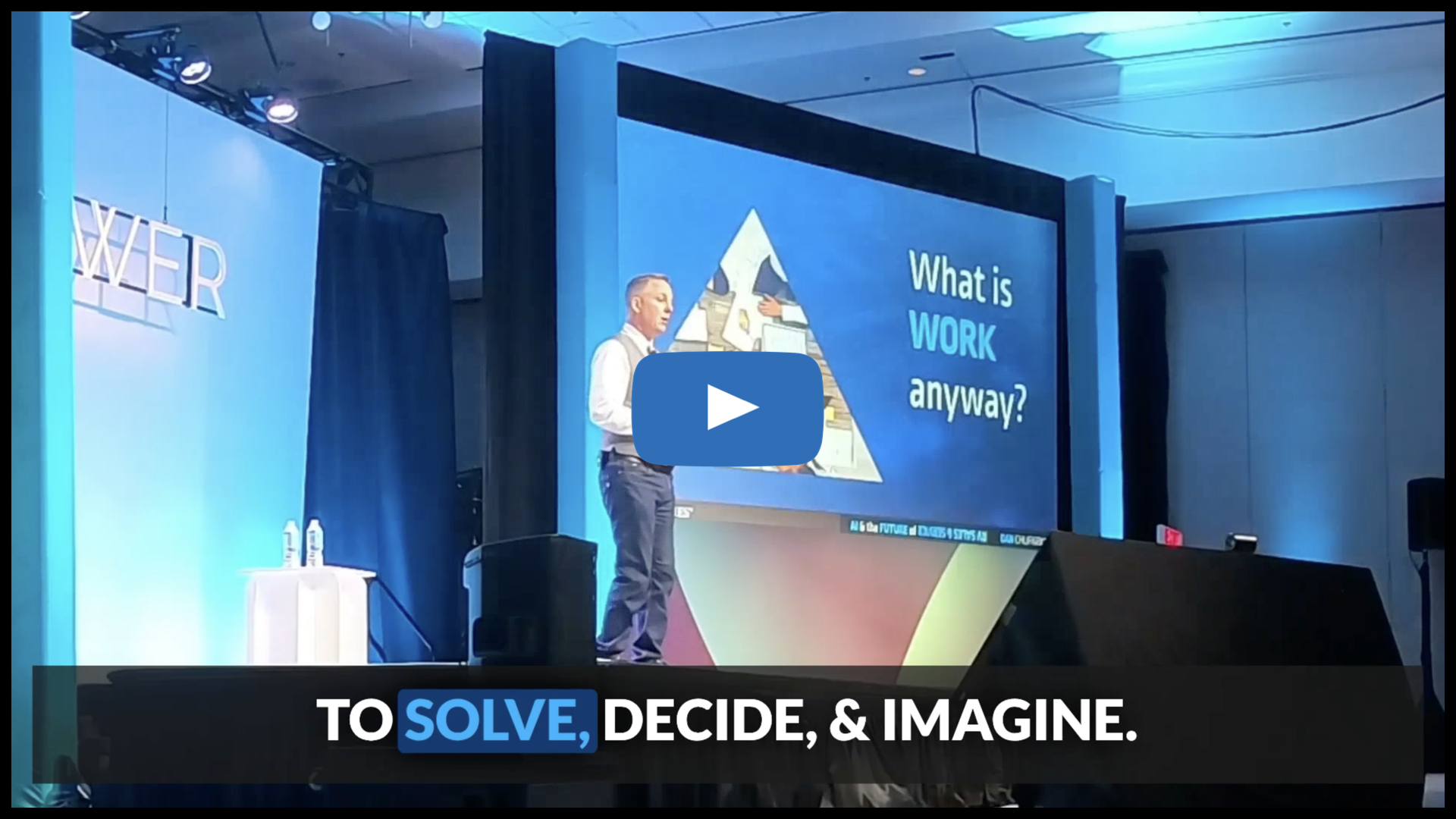
AI took notes for me as I presented the AI & the Future of Innovation & Quality keynote. Then, AI turned those notes into a song! Here it is. Your specific AI notes and the key slides are also here, so that you can try some of those prompts on your own.
On this page, you will find:
– the custom AI GENERATED SONG based on the AI keynote (it’s actually good!)
– the AI NOTES from your session transcribed by Otter.ai
– a downloadable PDF SUMMARY of the most important slides
Please let us know how we can be helpful in the future!
Dan

Dan Chuparkoff
A.I. & Innovation Keynote Speaker
CEO, Reinvention Labs
Former Technology Leader from
Google, McKinsey, & Atlassian

Listen to the
AI KEYNOTE SONG
The easiest way to review or share some of the key points of my AI & the Future of Everything Keynote is to listen to or share this song. My goal is to have you and everyone on your team singing, “We will always need people to solve, decide, & imagine.” and if this song helps to make that possible, then AI has, in fact, helped me to do my job better!!
PDF SUMMARY of key slides
This “Slide Cheatsheet” was customized for your specific talk. It’s designed to help audience-members like you, by wrapping my AI & the Future of Everything keynote into an easy-to-skim, easy-to-share, or easy-to-print resource for future reference.
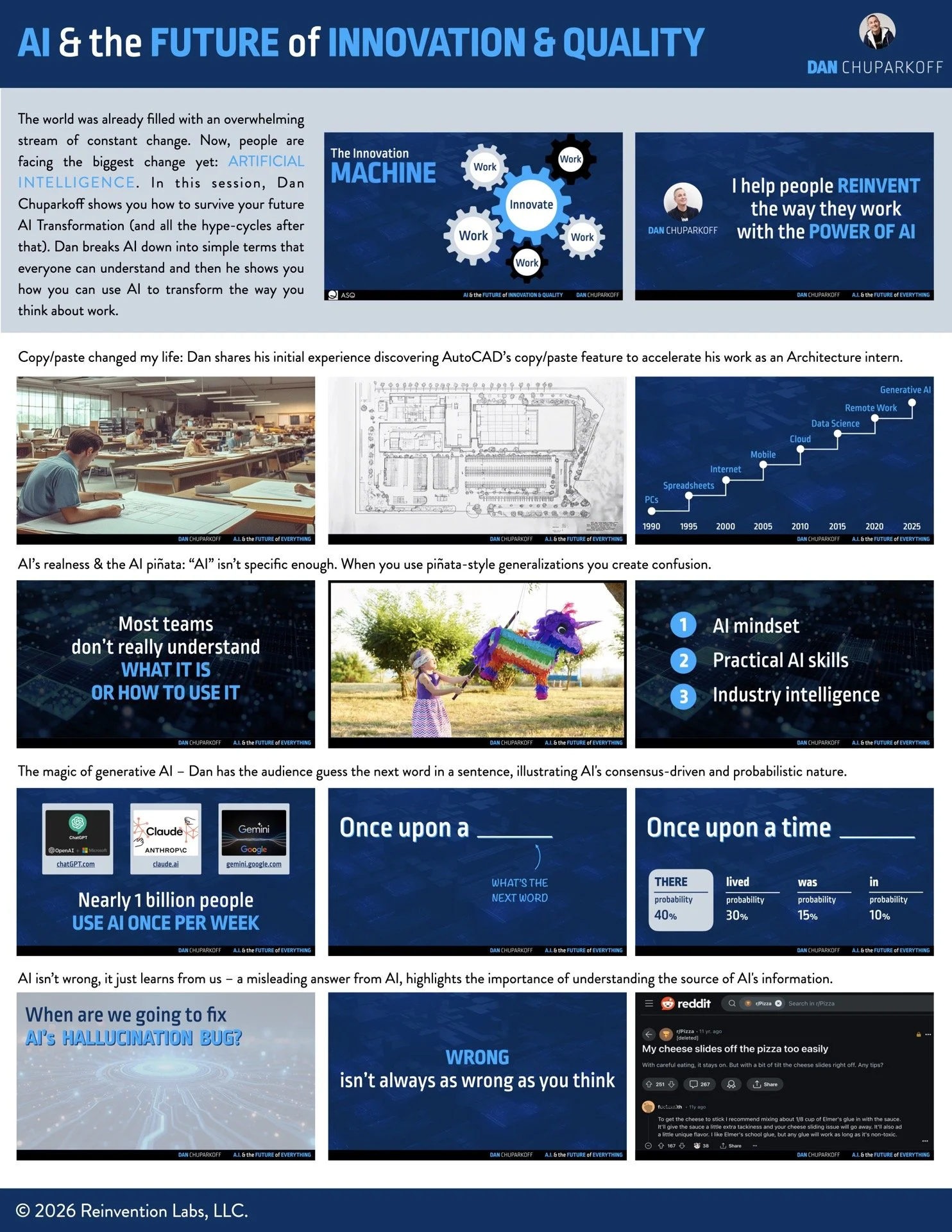
Download the 3 page
high-resolution PDF here:
Hope you find it helpful!
AI NOTES from Dan’s AI Keynote
*These notes were created automatically by Otter.ai. Transcription errors or mistakes have not been fixed in order to demonstrate the current state of AI notes.
Summary
Dan Chuparkoff, a seasoned innovator with 35 years of experience, discussed the transformative impact of AI on work and quality management. He emphasized that AI, while powerful, is an imprecise tool that requires a human quality layer for oversight. Chuparkoff highlighted AI's role in optimizing routine tasks like communication and decision-making, freeing up time for more complex problem-solving and strategic thinking. He stressed the importance of adopting a new mindset to leverage AI effectively and warned that AI's reliability is currently low, with a 99.9% accuracy rate. Chuparkoff also introduced AI's potential in enhancing meeting efficiency and decision-making processes.
Action Items
[ ] Review the notes from Otter and the Solve, Decide, & Imagine keynote song after the session
[ ] Review the slides sent after scanning the QR code.
[ ] Type the prompt: ‘What are 10 ways that AI is changing my industry…?‘ so that you can stay informed about the transformations in your work.
[ ] Try the prompt: 'I am a [job title]; every Monday, give me one new AI thing I should try' so attendees can set up a weekly AI tip feed
Outline
Introduction of Dan Chuparkoff
Speaker 1 introduces Dan Chuparkoff, highlighting his extensive experience in innovation at Google and McKinsey.
Speaker 2 describes Dan as a trailblazer with over 30 years of experience in driving innovation.
Speaker 3 mentions Dan's ability to make complex technology simple and useful.
Speaker 4 and Speaker 5 emphasize Dan's captivating presentations at major events like South by Southwest.
Speaker 6 officially welcomes Dan Chuparkoff to the stage.
Dan Chuparkoff's Background and Journey
Dan Chuparkoff begins by expressing excitement about discussing innovation and his long-term study of the subject.
He shares his background, starting from a difficult upbringing in a trailer park in Tampa, Florida, to becoming a leader at Google.
Dan recounts his first job at the architecture and engineering board, where he learned to draw parking lot lines.
He introduces Mr. Pock, an architect who used AutoCAD, a computer-aided design software, which revolutionized his work.
Dan describes the transformative experience of using AutoCAD to draw parking lot lines quickly and accurately, contrasting it with his previous manual methods.
The Impact of Technology on Work
Dan reflects on the broader impact of technology on work, using AutoCAD as an example of how new tools can change the way people work.
He discusses the evolution of technology, from PCs and spreadsheets to the internet, mobile, cloud, and now generative AI.
Dan emphasizes that AI will become an integral part of daily work, similar to how copy and paste became a common practice.
He highlights the importance of adopting a new mindset to fully leverage new technologies like AI.
Dan argues that innovation is not just about ideas and tools but about how those ideas and tools are brought to life and integrated into work.
The Role of AI in Quality Management
Dan explains that AI is changing the way people work, making it difficult to distinguish between real and AI-generated content.
He discusses the challenges AI presents to quality management, particularly in making decisions and ensuring accuracy.
Dan introduces the concept of a quality layer above AI tools to ensure the quality of AI-generated outputs.
He emphasizes the need for organizations to understand the limitations and capabilities of AI to effectively manage its impact.
Dan outlines the importance of continuous quality monitoring and control as AI becomes more prevalent in various industries.
Understanding AI and Its Limitations
Dan explains the basics of AI, using the example of GPT (Generative Pre-trained Transformer) and ChatGPT.
He discusses how AI predicts the next logical word or pixel in a string or image, using probability to make its predictions.
Dan highlights the limitations of AI's confidence, noting that AI often provides the most probable answer, not necessarily the correct one.
He stresses the importance of understanding AI's confidence levels and questioning its outputs to ensure accuracy.
Dan uses the example of auto-complete in text messages to illustrate how AI can sometimes fail to predict the correct word.
The Future of AI in Quality Management
Dan outlines the potential benefits of AI in quality management, including drafting audits, improving search functionality, and creating continuous flagging of emerging patterns.
He discusses the use of vision AI for continuous observation and process mining to expose rework and delays.
Dan emphasizes the importance of executive communication and personalized micro-learning to drive innovation and quality.
He highlights the role of AI in guiding quality management teams and ensuring AI governance within organizations.
Dan encourages attendees to ask their AI assistants important questions to stay informed about AI's evolving capabilities and applications.
The Importance of Human Judgment in AI
Dan argues that while AI can handle routine tasks, it cannot replace human judgment and decision-making.
He explains that AI is pre-trained on existing data and cannot handle new, unique problems that require human creativity and experience.
Dan uses the example of problem-solving and decision-making to illustrate the limitations of AI.
He emphasizes that humans will always be needed to solve new problems and make decisions based on their unique experiences and hopes.
Dan discusses the importance of leveraging AI to handle routine tasks so that humans can focus on more important, creative work.
The Pyramid of Work and AI's Role
Dan introduces the concept of the pyramid of work, which includes communication, process, investigation, problem-solving, decision-making, and imagining.
He explains that while AI can handle routine tasks at the bottom of the pyramid, humans are needed for more complex, creative work at the top.
Dan discusses the importance of focusing on problem-solving, decision-making, and imagining to drive innovation and quality.
He emphasizes that AI will not replace human jobs but will change the nature of work, allowing humans to focus on more important tasks.
Dan highlights the need for continuous improvement and adaptation to leverage AI effectively in quality management.
The Impact of AI on Communication and Collaboration
Dan discusses the significant amount of time spent on communication and collaboration, which AI can help optimize.
He explains how AI can improve meeting efficiency by drafting agendas, polling attendees, and interrupting repetitive discussions.
Dan introduces the concept of meeting assistants that can help manage communication and collaboration more effectively.
He highlights the potential for AI to create new time for teams by optimizing routine communication tasks.
Dan emphasizes the importance of leveraging AI to improve collaboration and create more time for solving hard problems and making better decisions.
The Future of AI and Quality Management
Dan outlines the potential for AI to drive significant improvements in quality management by optimizing routine tasks.
He discusses the importance of building a quality layer above AI tools to ensure the quality of AI-generated outputs.
Dan emphasizes the need for continuous monitoring and control to manage the impact of AI on quality management.
He highlights the potential for AI to create new opportunities for innovation and quality improvement.
Dan concludes by encouraging attendees to embrace AI and leverage it to drive better quality and innovation in their organizations.